|
The
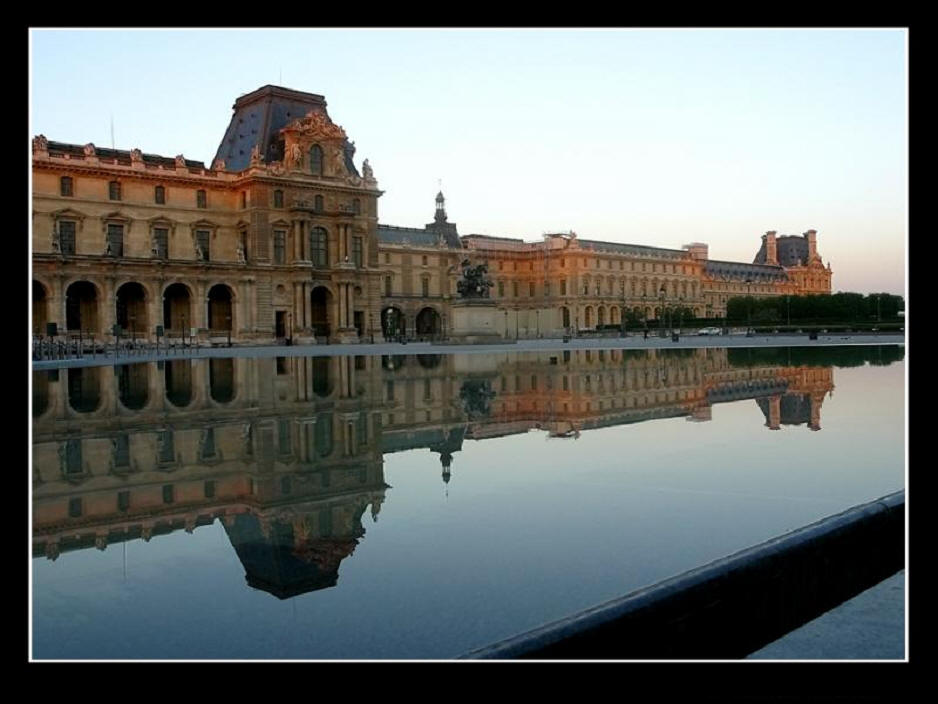
Louvre Museum V
Article written by Rick Archer,
May 2007
|
|
|
|
 |
| |
|
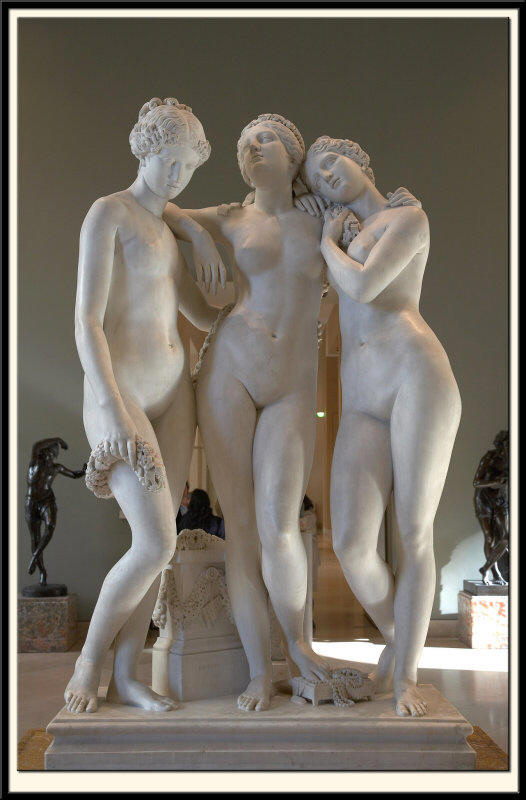 |
029.
The Three Graces
- A mystery!
Rick Archer's Note: Well, I thought it was
the Three Graces, but I can't find any corroborating
evidence that this sculpture is part of the Louvre. I
have seen pictures of at least four different 'Three Graces'
sculptures, none of which included this picture above.
July 2010
Mystery Solved!
Anna
Anderson: this is the work of
James Pradier,
Swiss Sculptor,
1790-1852. He created The
Three Graces in 1831. It indeed resides at the Louvre.
|
|
 |
030.
The Death of Sardanapal, Eugene
Delacroix, 1827
Eugene Delacroix is numbered among the greatest and most
influential of French painters. He is most often classified
as an artist of the Romantic school. His remarkable use of
color was later to influence impressionist painters and even
modern artists such as Pablo Picasso.
Delacroix was born on April 26, 1798, in Charenton-St-Maurice,
France. In 1815 he became the pupil of the French painter
Pierre-Narcisse Guerin and began a career that would produce
more than 850 paintings and great numbers of drawings,
murals, and other works. In 1822 Delacroix submitted his
first picture to the important Paris Salon exhibition: Dante
and Virgil in Hell. A technique used in this work--many
unblended colors forming what at a distance looks like a
unified whole--would later be used by the impressionists.
His next Salon entry was in 1824: Massacre at Chios. With
great vividness of color and strong emotion it pictured an
incident in which 20,000 Greeks were killed by Turks on the
island of Chios. The French government purchased it for
6,000 francs.
Impressed by the techniques of English painters such as John
Constable, Delacroix visited England in 1825. His tours of
the galleries, visits to the theater, and observations of
English culture in general made a lasting impression upon
him.
Between 1827 and 1832 Delacroix seemed to produce one
masterpiece after another. He again used historical themes
in The Battle of Nancy and The Battle of Poitiers. The
poetry of Lord Byron inspired a painting for the 1827 Salon,
Death of Sardanapalus.
(Note: Delacroix's most
famous painting, Liberty Guiding the People, is on the next
page.)
|
|
 |
031. Does anyone know the name of the painting above?
|
|
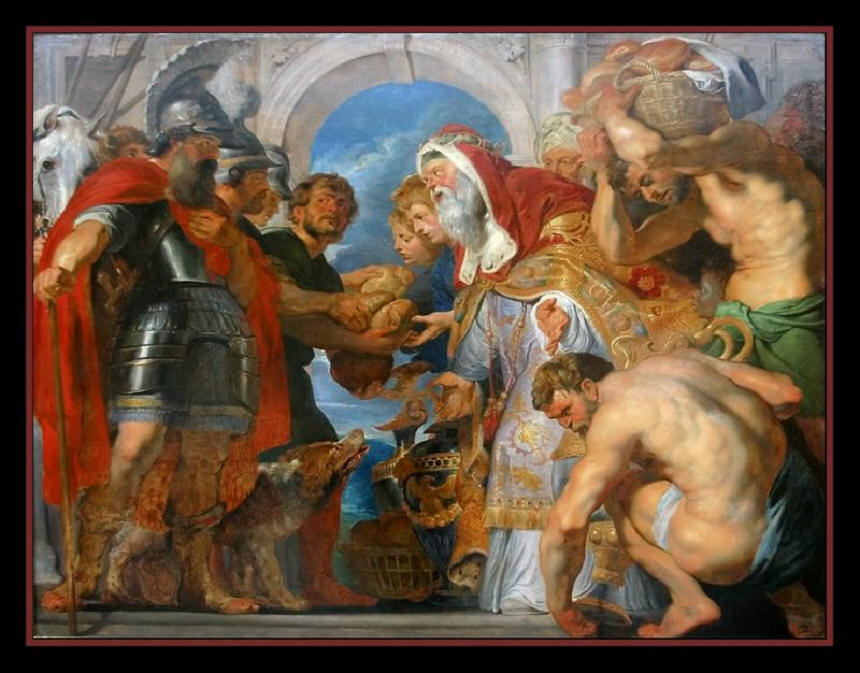 |
032. Abraham and Melchizedek,
Peter Paul Rubens (1577-1640). Musée des Beaux-Arts de Caen,
France.
(Title contributed by Olga Milner. Please note this
picture is not at the Louvre.)
|
|
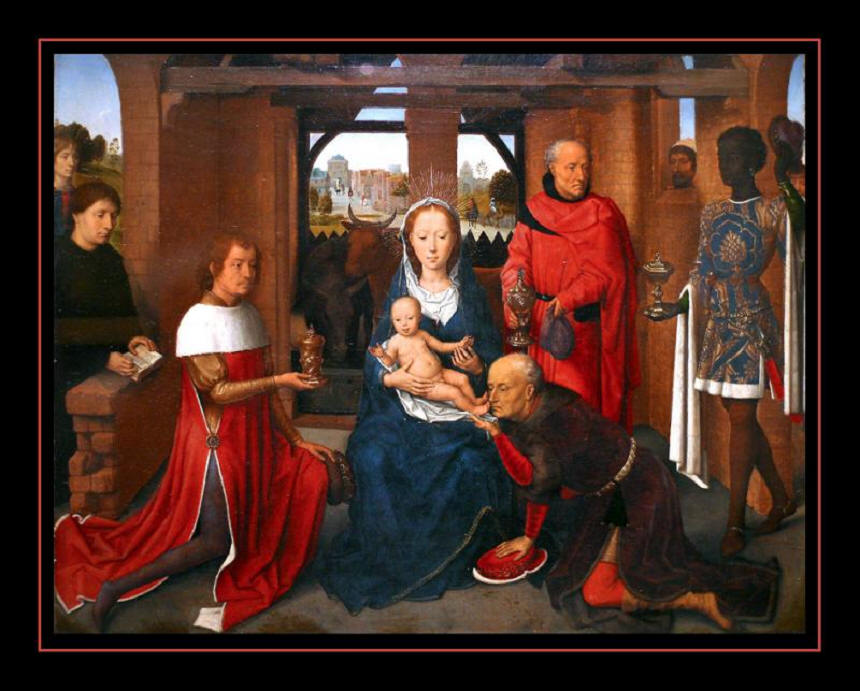 |
033:
Triptych of Jan
Floreins
(central panel),
artist Hans Memling, 1479
Title contributed by Anna Anderson, July 2010, with this
note:
From what I gather,
this picture is not part of the Louvre. It is said
to reside at Memlingmuseum, Sint-Janshospitaal, Bruges
Perhaps your picture is a copy of this? Colors are
brighter, but it is clearly the same work. It's a
start.
|
|
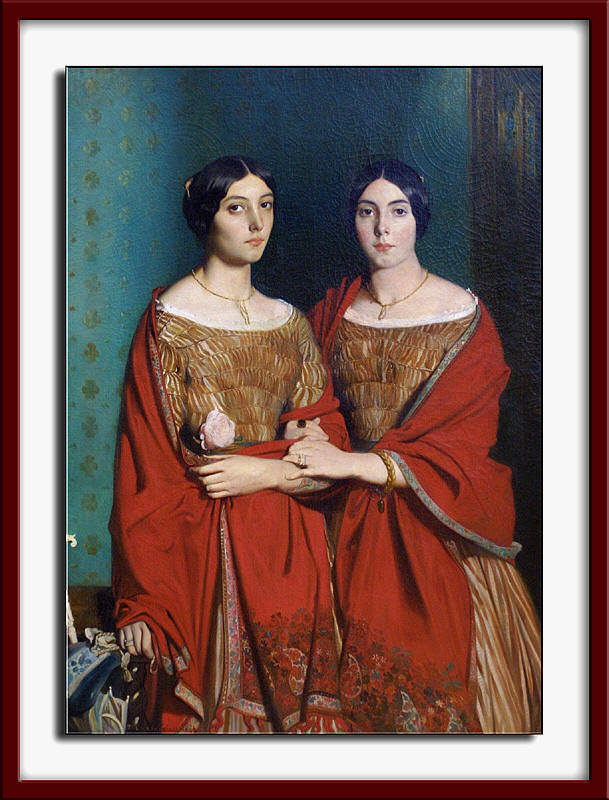 |
034.
Les deux soeurs,
1843,
Théodore Chasseriau (Title
contributed by Olga Milner)
|
|
 |
035. The Moneylender and
His Wife (1514)
Quentin Metsys (title contributed
by Rebecca)Title confirmed on
Louvre Museum website
|
|
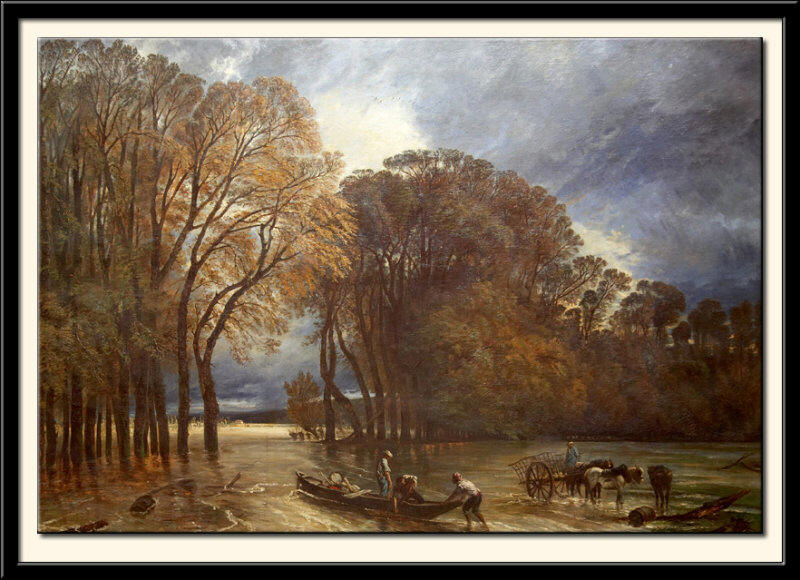 |
036. The Flood Of Saint-cloud by Paul
Huet (identified by Ken Van Every)
|
|
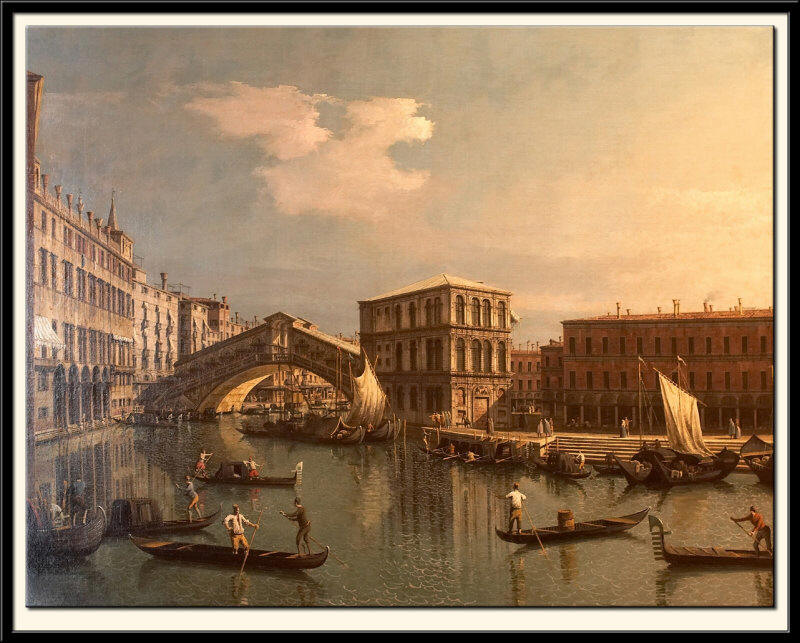 |
037.
The Rialto Bridge,
Giovanni Antonio Canal (Canaletto)
(Title contributed by Olga Milner)
|
Next Page:
Louvre VI
|
|