|

A SIMPLE ACT OF
KINDNESS
CHAPTER fifty six:
yogananda
Written by Rick
Archer
|
|
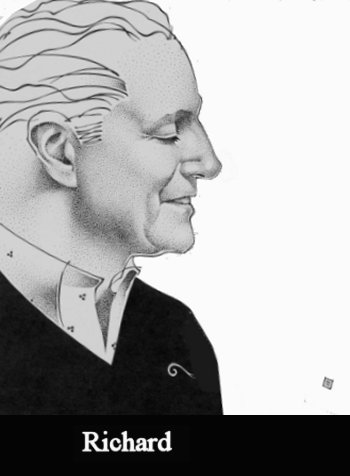 |
Rick Archer's
Note:
Richard never talked about himself very
much, but I have a strong hunch he was a
Mystic.
Richard lived in a mysterious place
north of Baltimore known as Koininia,
the Greek word for 'community'.
Koininia was a spiritual retreat.
It sponsored community life for 50-80
residents, many of whom were older.
The residents engaged in spiritual
study, meditation, prayer and training
to take literacy, agriculture, health,
and similar practical skills into the
undeveloped world. Much of the
Peace Corps' program was modeled after
Koinonia. The community's center
of gravity was nonsectarian
Christianity, with strong Quaker
influences.
I never quite figured out what was going
on at Koininia or where it got its
money, but it was a welcoming, peaceful
place set in a rural area. During
my two years of intense study into
Mysticism, I would join Richard at least
once, more often twice a week for a
group morning meditation at Koininia.
He became a guide of sorts.
Richard did not like to lecture me, much
preferring to recommend books and then
ask me what I thought about these books.
My first readying assignment was
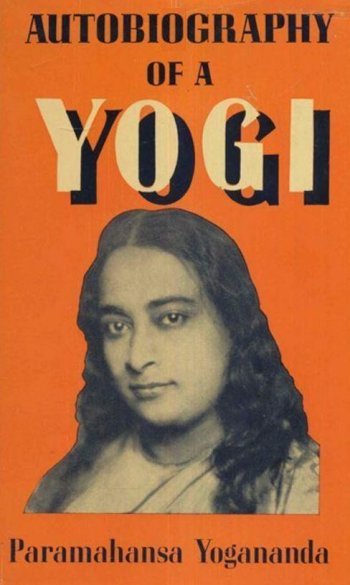
Autobiography of a Yogi. I
loved this book. It is my all-time
favorite book.
|
|
|
march 1970,
second semester, sophomore
year, Age 20
autobiography of a yogi
|
 |
My new friend Richard made quite an
impression on me. He reminded me a lot
of Mrs. Ballantyne, the lady who had
intervened in my high school crisis two
years earlier. Richard had done more
or less the same thing. He had
effectively intervened in my latest crisis.
There was something about Richard that made
me trust him implicitly. Richard
encouraged me to read a book titled Autobiography of a Yogi
and told me where I could find a copy.
Unable to contain my curiosity, I quickly
made my way to the Aquarian Age
Bookstore. This book served as my
introduction to the concept of Fate.
Paramahansa
Yogananda (1893–1952) was an Indian Hindu yogi who came from India to California to spread
Eastern teachings. A chief disciple of the Bengali yoga guru
Swami Sri Yukteswar Giri, Yogananda lived his
last 32 years in America. His long-standing
influence in the American yoga movement, and
especially the yoga culture of Los Angeles, led him
to be considered by yoga experts as the "Father of
Yoga in the West."
Autobiography of a Yogi was written in
1946. His book is now regarded as a spiritual classic.
One word of warning. If you are unfamiliar
with the concepts of Eastern Religion, some of the
ideas I am about to discuss may rub you the wrong
way. If so, please forgive. I beseech
you to have an open mind.
|
Yogananda
described a universe I found very intriguing.
First he discussed a Hidden World that exists beyond the
realm of human sight. Then he explained the
concepts of Reincarnation and Karma, adding that these
are not theories, they are fact.
Karma is the law of
moral causation, an eastern variation of the Christian idea that 'as ye sow, so
shall ye reap.' Due to the law of cause and effect, whatever
one does has consequences, be it in this lifetime or the next
lifetime.
The concept of Karma implies that each life has certain
events that are 'Fated' to happen whether we like it or
not. During a 'Fated Event', the only choice we have in the matter is our attitude and
how we decide to react to our Fate.
Not all Karma is bad. Sometimes it involves a lucky
break or the granting of a heartfelt wish. Other times
it might involve sickness or hardship. The idea of Karma and Reincarnation intrigued me greatly
because it suggested there might be justice behind all this
suffering I was currently undergoing at Hopkins.
I do not wish to offend
my Readers, but intellectually I have long objected to the Christian
principle of One Life. While I respect the teachings of
Jesus, my problem with Christianity lays in the obvious unfairness
of the 'One Life to Get it Right' system.
The God I prefer to
believe in would create a level playing field. Some are born
into good Christian homes and receive the training necessary to live
a spiritual life. Others are born into squalid conditions and
are taught to lie, steal, and kill if necessary to survive.
One has a clear path to Heaven while the other is seriously
handicapped. However, what if the roles are reversed in the
next lifetime? That would be the fair thing to do.
What is the
Golden Rule of Education? If at first you don't
succeed, try, try again. To me, it makes perfect sense that an
All-Knowing God would give us the chance to try as many times as
necessary to get it right. Therefore I was pleased
to find the concepts
of Karma and Reincarnation as described by Yogananda satisfied my sense of justice. In
this system, nothing happens to a person that he does not deserve for some
reason. As Yogananda explained, any unexplained suffering in this lifetime
was probably the result of
a misdeed in a previous lifetime. Considering the Edgar Cayce
book I had during the summer of 1968 had said essentially
the same thing, it was reassuring to see Yogananda and Cayce
on the same page.
|
 |
Yogananda spoke of the 'Spirit
World' and the 'Material World'.
His description suggested there is a world that
exists side by side with what we refer to as
Reality. I had long wondered if Invisible
Beings were responsible for some of the weird things
that kept happening to me. Therefore I was very curious
about the Yogi's 'Spirit World'. Who
lives there? Ghosts? Angels?
Leprechauns?
From there Yogananda
moved onto a discussion of Fate. The way he explained it, we
do have Free Will, but it comes with an asterisk.
Every
terrible thing that happens to us is something our Soul agreed
to before rebirth. Our human consciousness may
not like what happens to us, but at the Soul level, we have
chosen
these experiences as lessons to be learned in this lifetime.
Although previous Karma determines certain things are Fated to
take place, we
are given
Free
Will as well. Predestination and Free Will are present side by side
throughout every person's life.
Due to Karma, some things are more probable than others, but as
long as there exists Free Will, new outcomes are possible.
Each soul incarnates with a general plan for the life to
be experienced. This implies that a certain life script,
or 'Destiny', exists at birth. It is the responsibility of
the individual to deal with at least some Karma from previous
lifetimes. In addition, some souls choose
a positive mission to fulfill. Others who have made many mistakes in
the past have a debt to pay.
Individual souls tend to renew relationships with
familiar souls from previous lifetimes. Spouses,
siblings, parents, friends and mentors frequently turn
out to be souls with whom one has had previous associations.
Sometimes one interacts with troubled souls while others are
past friends and benefactors. The concept of the
'Soul Mate' originates from Reincarnation.
If Yogananda was right about the Hidden World and Fate, then perhaps I had finally found an explanation for some of
the weird things that kept happening to me. For example, what
if I was meant to see Emily get out of the cab with Eric?
Maybe the acne attack took place because it was my Karma to experience
a lifetime of problems with women.
Maybe I was meant to struggle in my Senior Year of high school.
For that matter, maybe Connie Kill Shot entered my life
for a purpose. Suddenly I
began to see my problems in a different light. If a person's
life is shaped by past Karma, then there is a reason for
everything after all. If so, there is Order to the
Universe.
The problem
with believing in Fate is that it contradicted my concept of Free Will.
For a while there, I was convinced I had no free will. I
am not sure why but I lost interest in
studying. If everything is predetermined, then what difference does anything I do make?
However, the moment my grades began to fall, I snapped back to
Reality. I decided I did not understand the nature of Free
Will deeply enough to assume everything is predestined. In
other words, until I achieved further enlightenment, the smart move
was to continue running my life as if I was the captain of my own
ship. So I put down Yogananda's book and began studying for my next test.
What do I mean by 'Asterisk'?
We all have a credit card payment due at the end of the month.
Karma is God's credit card payment. We are going to have to
pay it whether we like it or not. Is the requirement to pay a
credit card debt a violation of our Free Will?
To me, it all boils down
to Reincarnation. I am blind in my left eye because I cut it
in a freak accident when I was 5. That handicap kept me from
being a member of my high school basketball team. Is that
fair? No! I didn't do anything to deserve that accident.
Or did I? According to Yogananda, our memory of previous
incarnations is erased at birth. Consequently we have no idea
what baggage we carry into each new lifetime. If we can
believe Yogananda, I very well may have put someone else's eye out
in a previous incarnation.
Personally speaking, I
approach every day as if I have Free Will. I put on my seat
belt, I avoid fattening food, I exercise, I get regular health
checkups. I make my decisions based on what modern science has
taught me just like I would if I were an atheist. That said, I also
believe
certain things will happen to me and there is nothing I can do to
prevent it.
Why do think this way?
There was a chapter where Yogananda
was told by his guru he was about to get sick. I remember the
story
well enough to retell the incident. Yogananda had a master
named
Swami Sri Yukteswar. One day Sri Yukteswar handed Yogananda a
special arm band and told him to wear it. Yogananda asked what
it was for. The Swami replied that his astrological Fate
predicted he would become sick in one month. Yogananda's liver was
about to
develop a serious problem. However, if Yogananda were to wear
the armlet, the length of the illness would be shortened from six
months to one month. Sure enough, Yogananda got sick just as
predicted and recovered just as predicted. From that story, I
gathered that even yogis and saints are not immune to the dictates of Fate and
Karma.
Please do not expect me
to talk
about these matters as certainty. I am simply reporting my
impressions of things I read. The sense I got from
Autobiography of a Yogi is that we have Free Will most of the
time. However, obstacles will be placed in our path from time
to time. Since character cannot be developed in times of ease,
it is through trial and suffering that the soul can be strengthened. Yogananda
said that
each soul incarnates with a general plan for the life to
be experienced. This implies that a certain life script,
or 'Destiny', exists at birth. From that passage I
assumed my blind eye and scarred face might be the result of unpaid
debts.
Yogananda said individual souls often renew relationships with other souls from
previous lifetimes. Spouses, siblings and parents frequently turn
out to be souls with whom one has former associations.
Sometimes one interacts with troubled souls while others may
become friends and benefactors. The concept of the
'soul mate' originates from Reincarnation. After reading this, I began to
wonder if Mr. Salls and Mrs. Ballantyne were my soul mates. It
was very strange how all three of us had identical
difficulties growing up and how closely the three of were
connected in this lifetime.
|
I am well aware that
most people do not believe in Reincarnation.
I might add that a belief in Reincarnation is unnecessary to
lead a successful life. However, a belief in Karma is a
different story. Look no further than the thought that
Santa Claus is
keeping a List. To me Karma is the same thing. The
belief that God is keeping a List certainly had a sobering effect on
me.
So who was Paramahansa
Yogananda? Was he the real deal or was he a charlatan?
Can we trust him? For that matter, what about the Bible?
Do you have any idea how many times the Bible has been translated
and retranslated? How much can we trust the skill of the
translators? What if some monk saw a Greek word and
decided it meant 'Celibate' instead of 'Celebrate'?
Is there really a Hidden
World? How should I know? I've never seen it. Does
Reincarnation exist? How should I know? I don't remember
any past lives. Much of my belief system is based on the words of
people I have never met. And the same goes for you. Your
belief in Heaven is based on something you have read. For that
matter, how much can you believe about the so-called Supernatural
Experiences that I report? When it comes to spiritual matters,
who do you trust? Who do you have confidence in?
On a day-to-day basis, I
am
no different from a Reality-oriented person. I run my life based on the
principles of Reality. I never fail to put my seat belt on.
I assume if I jump off a cliff, I will die. I would never
dream of asking God to save me if I break the rules of Reality.
That said, I want to know the truth, so I
continue to ask questions. In my case, I find the
possibility of a Hidden World to be both fascinating and scary.
But I have no proof. I have no direct experience. But I
believe in it! Why?
Circumstantial Evidence,
that's why. Why did Bob walk in at the perfect time to catch
me cheating? Why did Mrs. Ballantyne show up at the perfect
time to intervene in my crisis? Why did Cheryl appear at the
perfect time to grant me a wish upon a star? Why did Jake
knock on my door at the perfect time so I could see Eric and Emily
get out of the taxi at the train station? The probability of
any one of the incidents is so remote it defies credulity.
Sure, we all know coincidences happen. But four of them?
At some point I decided these so-called accidental meetings were not
accidents at all, but rather meetings coordinated by Unseen Beings
from the Hidden World. In other words, I do not trust blindly,
I do everything in power to verify.
So what does Yogananda mean by
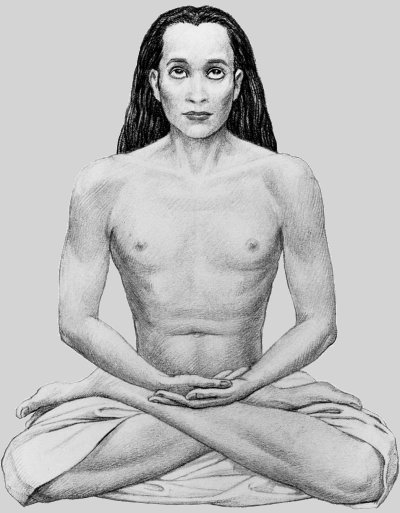
a Hidden World? In his book, Yogananda told the tale of Babaji, an
immortal saint who never dies. Yogananda claimed
Babaji is a real-life
entity. He is a deathless avatar who exists as Divinity in
physical form
in the same way that Jesus was Divinity in physical form. Let
me introduce Babaji with a series of questions which I will answer
myself.
"What is
Divinity in physical form?"
"I assume that means
Babaji has a flesh and bones body here in the Material World just
like Jesus did."
"Is Babaji related
to Jesus in some way?"
"Yes. As a
way to emphasize Babaji's
immortal nature and great importance, Yogananda claimed that Jesus
Christ once traveled to India to meet with Babaji. Yogananda said
that great prophets like Jesus and Krishna come to earth for a
specific and spectacular purpose, then depart as soon as their
purpose is
accomplished. Meanwhile other avatars such as Babaji undertake work
behind the scenes. They are concerned with the slow evolutionary progress of man over the
centuries. Such
masters veil themselves from public gaze and have
the power to retreat to the Hidden World by becoming invisible at will. For these reasons, and
because they generally instruct their disciples to maintain silence
about them, a number of towering spiritual figures such as Babaji remain
unknown to the
outer world."
"And Rick
Archer believes all
this?"
"Yes and no. Yes, I would like to believe all this, but
I am not completely gullible. I am well aware this
could all be someone's fantasy. The way I look at it, the
stories Yogananda
writes about are no weirder than stories I have read in the
Bible. If someone can believe in Jesus, then what is so wrong
about the possibility there could be a different Christ figure?"
"Where does this Babaji fellow live?"
"Babaji is said
to reside deep in the mountains of Tibet. He is
ageless. The secluded
master has retained his youthful physical form for centuries,
perhaps millenniums. So let's read Yogananda's story about the Hidden World."
|
"Babaji had a group of Disciples who followed him
everywhere. With these men at his side, Babaji
conducted spiritual lessons in remote locations high
above in the Himalaya Mountains.
One afternoon Babaji's sacred circle was disturbed by a
stranger. This stranger had climbed with amazing
skill to the nearly inaccessible ledge where the meeting
took place. The Disciples stared at this man with
undisguised astonishment at his impossible feat.
The moment the stranger spotted Babaji, the man's face
became lit with inexpressible reverence. The
stranger quickly ran to Babaji and threw himself at the
Master's feet.
"Sir," the stranger exclaimed, "you must be the great Babaji!! For months I have pursued a ceaseless
search for you among these forbidding mountain crags.
I implore you to accept me as your disciple."
Babaji stared at the man wordlessly and without
expression. Now the
stranger pointed to the rocky chasm nearby.
"Master, if you refuse to accept me, I will jump from
this mountain cliff. Life has no further value if I
cannot win your guidance to the Divine."
"Then jump," said Babaji without emotion. "I
cannot accept you in your present state of development."
Without another word, the man instantly hurled himself
over the cliff. The disciples stared in horror as
the man fell to his death far below. They flinched
as the sound of the man's impact
signaled his end.
The Disciples were mortified. In shock, they turned
to protest.
"Sir! How cruel!"
|
 |
| |
Babaji did not react. He merely stared
blankly into the distant towering mountains.
A hush fell over the group. After several
moments passed, Babaji directed the disciples to
climb down to the valley and retrieve the
stranger's mangled body. When they returned,
the Master placed his divine hand upon the dead
man's heart. Instantly the stranger reopened
his eyes. Once the stranger had been
revived, he stared in bewilderment as the
frightening memory of falling
to his death returned. When the stranger
focused his eyes on Babaji once more, his emotion
returned. Again he
prostrated himself humbly before the master.
This time
Babaji
smiled warmly. He touched the man on the shoulder
and addressed him with kindness.
"My friend, you have courageously passed a
difficult test. Through your unquestioning
act of devotion, you are now ready for
discipleship. Death shall not touch you
again; you are now one of our immortal flock."
Babaji then uttered his words of departure... "Dera
danda uthao!"
Instantly the entire group vanished from the
mountain."
|
|
|
A SIMPLE ACT OF KINDNESS
Chapter
fifty seven:
Carl Jung
|
|
|