|
BROTHER AND
SISTER
CHAPTER EIGHT:
RAGS TO
RICHES
Written by
Rick Archer
|
|
 |
Rick
Archer's Note:
All told, Maria Ballantyne and I had six conversations
spread out over 47
years. In each conversation, Maria Ballantyne would invariably mention her brother,
usually at great length.
After their father abandoned
them, George and Maria became inseparable. As she put it, "It was 'George and me against the
world. George was my best friend, my only friend."
Considering George, 13, was only a year and six months older
when their mother died, Maria could not imagine how her
brother managed
to be so brave.
Mrs. Ballantyne spoke highly of
George's
determination to succeed in life. She loved to tell
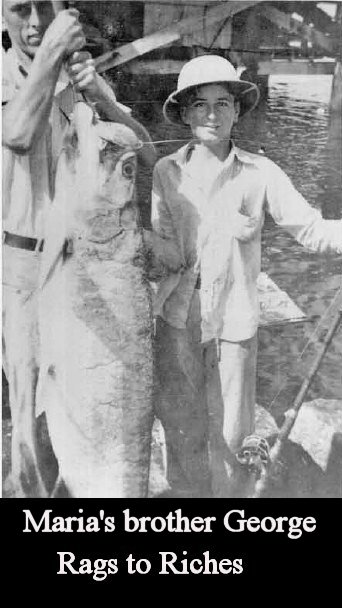
stories of how George caught fish in Galveston Bay after
school as a way to save money for college. Sometimes
she would go with him to help. They both
knew their father would never come through. Other stories
told of George working hard at menial part-time jobs
such as waiting tables to pay his way through college.
I got the picture. George would not let his
near-orphan status or lack of money deter him from
succeeding in life.
During our conversation in 1978 Mrs. Ballantyne
said something that made me sit up straight in my seat.
Given her beautiful home situated in Houston's wealthiest
neighborhood, I had
always assumed Mrs. Ballantyne had married a rich man.
However, I
was wrong. Mrs. B casually mentioned her invaluable River Oaks property
had been a 'Welcome back to Houston' gift from
George. In other words, 'Free'. Well
aware this property had to be worth several millions of
dollars, I was astonished. Waiting on tables in
college?
Catching fish? Barely able to pay his way through
Texas A&M? What could possibly explain her brother's
incredible rags to riches story?
Seriously, what kind of man catches fish to pay for college, then
has the money to hand his kid sister a property worth millions
as a gift?
Given the humble beginnings Maria and George faced as children, I could not imagine where his
wealth would come from.
From that moment on I
burned with curiosity. I cannot
emphasize this enough. Given that my
friend Maria worshipped her brother George,
I could not help but wonder who this guy
was.
I literally sat on the edge of my seat
hoping to ask my question, but alas
Mrs. Ballantyne never gave me an opening. Mrs. B had
the most dominant personality of any woman I ever met.
I would not dream
of interrupting. Instead I just smiled and listened.
Since she always referred to him as 'George',
I began to seriously doubt the man possessed a
last name. For that reason,
I assumed the
identity of George
was one of those many small mysteries of life I would never solve.
Oh well.
|
As I have made clear, Maria
Ballantyne was my hero and idol. In 1968 Mrs. Ballantyne had walked into my grocery store
at a time when I was suffering from the worst crisis of
my young life. She had no idea who I was, but her
maternal instincts warned that she was staring at a boy in serious trouble. Without being asked, Mrs.
Ballantyne pulled me aside in the parking lot and spent
45 minutes offering counsel. Her words were
magic. Feeling an incredible burden lifted
from my shoulders, Maria Ballantyne helped me regain the
hope I needed to carry on despite all my problems.
Ten years later we met again. During our 1978
conversation, she spent four hours offering more details
regarding her life story.
In 2005 I wrote an article about
Mrs. Ballantyne and published it on my dance studio
website. Her granddaughter Elizabeth discovered the
story and shared it with her grandmother. Mrs. B was so pleased, she
called and invited me to lunch.
More stories. In 2009 she dropped by my dance
studio along with her son Christie and his wife Yasmine.
Mrs. Ballantyne watched as I gave them a private lesson.
Towards the end, I turned on some music and told them to
practice while I talked to Christie's mother. More
stories. Mrs. B visited me this same way again in
2010. This time
Mrs.
Ballantyne revealed the secret role that Mr. Salls, my
Headmaster, had played in my life. After her
revelations, I went back and added several more chapters
to reflect the new information. At this point I
assumed my book was complete. Five years later I
realized I was nowhere near finished.
|
In 2015 I
was editing a chapter in my book
when I realized I did not have a single picture of Mrs.
Ballantyne. Hmm. Maybe I can find one on the
Internet. I typed in 'Maria Ballantyne' and
clicked 'Images'.
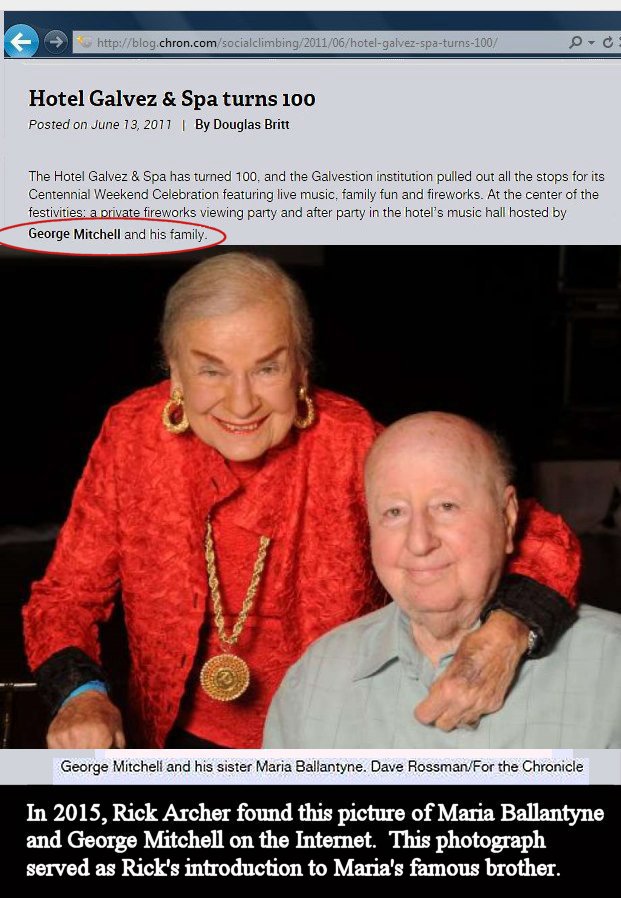
Only one picture popped up. It
was a 2011
photo of Mrs. Ballantyne, age 91. She was hugging a man close to her age.
A photographer from
the Houston Chronicle had
taken this picture at the 100th anniversary
celebration of Galveston's posh Hotel
Galvez. The caption read:
'George Mitchell and his sister Maria
Ballantyne.'
George?
Oh my God, this must
be him!! I
had no idea who he was, so I wasted no time
typing his name into Google. To my
surprise, this man had a Wikipedia profile.
Whoa. Curious, I clicked in and immediately
stopped breathing.
Mrs.
Ballantyne's brother George was a Billionaire,
#239 on the list of America's
wealthiest men. George is a
Billionaire?
Stunned, I sat there
motionless. I was too
paralyzed to even sip my nearby coffee.
Instead I just stared at the screen. It
took several minutes for this to sink in. Finally I snapped out
of it and began to
laugh.
Look who Mrs. Ballantyne has
been hiding from me all this time!
That sure was sneaky of her to get married
and
change her last name.
During our conversations, Mrs.
Ballantyne had hinted that George was wealthy,
but so are a lot of people. George
was also famous. The
whole world knew about him. Well, everyone but
me, that is.
I had never heard of George Mitchell,
so I spent the rest of the
day reading about Maria's amazing rags to
riches brother.
For hours on end I clicked this and
clicked that as I wrapped my mind around
the immensity of this man's many accomplishments.
The more I read, the
more amazed I became. I knew Mrs.
Ballantyne kept saying her brother was
special, but this guy was way beyond
special.
George Mitchell was incredible.
Given
my fascination with Maria Ballantyne, how could I help but
develop a similar interest in her brother?
At that
moment, I crossed my arms and let out a small sigh.
It was time to add George Mitchell to my book.
On the spot I gave my book a new name.
Brother and Sister.
|
 |
|
|
THE KEY MOMENT IN George Mitchell's
LIFE
|
I realize there is
some overlap between Maria's version of George and the
things I read about him. Hopefully the Reader will not object if I
retell the key story in George Mitchell's improbable rags to riches climb
in more detail.
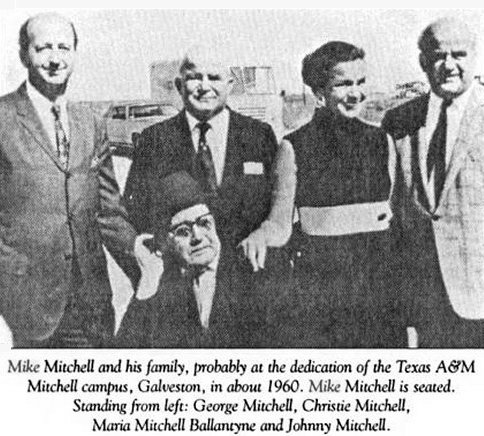
In 1931, George and Maria's
mother Katina suddenly passed away from a stroke. Their
father Mike completely fell to pieces at the loss of his
wife. Soon after that
Mike broke his leg
in a serious car
accident.
Deciding he was in no shape to be a
father, Mike told his
oldest sons Johnny, 20, and Christie, 19, to move to Houston
and get a job. Then he forced his brother to take George,
13, and his sister-in-law Virginia to take Maria, 11. Bitter,
Mike then dropped out of sight
to nurse his wounds both mental and physical.
Mike Mitchell
eventually resurfaced, but he had become a different man.
Mitchell completely ignored George and
Maria to pursue a life of babes, booze, and bets.
Working as a petty hustler who did odd jobs for the Galveston
Mafia to earn gambling money, Mike Mitchell was perpetually
broke. Meanwhile George and Maria developed something
close to hatred towards their worthless father for
abandoning them.
Well
aware his father would be of no help with college, George spent long
hours after school catching fish in Galveston Bay. He would
sell whatever he caught to the local seafood restaurants. By
the time he enrolled at Texas A&M, George had acquired a
nice nest egg. However, it was not enough.
|
 |
George constantly
scrambled for tuition money. Forced to work a
neverending succession of part-time jobs, one day he had an
interesting idea. Since A&M was a men's college, the campus
was full of lonely boys who missed their hometown honeys.
George sold gold-embossed stationery to
lonesome young men
pining for their missing sweethearts. However, this clever
idea was hardly sufficient to pay his way through college.
He waited on tables at
the residence hall for 25 cents an hour. He built book
cases and sold them to A&M cadets. He sold candy.
He sold stationary to lovesick freshman.
Unfortunately, Texas A&M had a very strict tuition policy:
pay on time or ship out.
Sometimes when
Mitchell
was short, he would borrow the rest from a friend and pay
him back later. Mitchell did whatever it took to make
the monthly payment so he could continue his studies.
Three
times George came within a whisker of being tossed.
Unfortunately,
there came a day when no matter how hard he tried, George
could not scrape enough money together. This was the
Depression Era. Jobs were hard to find, even
part-time jobs.
Certain he would be forced to drop out of school in the
middle of his Junior year, this felt like the end of the
line. Desperate, the young man thought about asking
his father for help. George dreaded making this move.
For one thing, it was a long shot. Depending on how the
cards had been falling, half the time his father was
penniless. More important, George's pride prevented
him from asking his worthless father for anything.
However, what choice did he have? Asking his father
was literally his last hope. George swallowed his
pride and wired his father for money. He needed $29,
the monthly tuition at A&M. Although $29 may not seem
like much here in the 21st Century, back in those days that
was a high threshold.
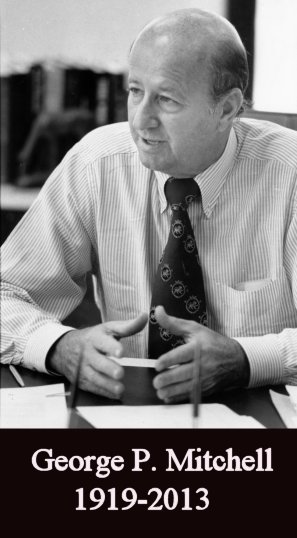
In George
Mitchell's own words, "As usual, Dad didn't
have a cent to his name. Unbeknownst to me, my dad went up to
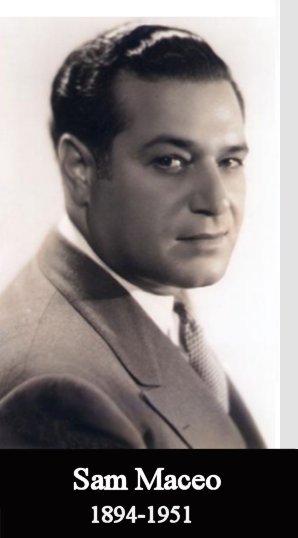
Sam Maceo, the Godfather of Galveston, a man he barely knew. He said, 'Mr.
Maceo, sir, my son is the top student at Texas A&M, but he is
going to get kicked out because he doesn't have any money.
Can you help?'"
Sam Maceo, the
infamous gambling impresario, stared at George's father
impassively for a moment.
He knew Mike Mitchell was a deadbeat. Realizing this
might be a con, Maceo was skeptical. Nevertheless, without a comment or question, Maceo reached in his
pocket, then wordlessly handed Mitchell a hundred dollar bill.
This was an enormous sum in 1935, equivalent to $2,400 in
2025.
|
 |
In George Mitchell's words:
"Dad
always lived by his wits. He knew I only needed $29.
So he went to a bank and got change. He sent
me $50 and kept the other $50 to play poker. That's my
father for you."
At the time George had no idea
that the Galveston Godfather was his true benefactor.
All he knew is that his father had come through for him.
This was the lucky
break George needed. This last-minute godsend allowed
George to avoid his closest brush with disaster to date.
Soon, however, there was another surprise waiting for him.
Suspicious,
Sam Maceo checked on the young man's
grades at Texas A&M. Maceo was taken aback. He
was surprised to find that Mike Mitchell, a notorious
conman, had not fibbed about his son's academic
prowess. Maceo was shocked to learn that George, the abandoned
son of an illiterate immigrant, really was at the top of his
petroleum engineering class. Impressed and deeply touched, Maceo
contacted George. He offered to make his monthly college
payments for the rest of the way.
As Maceo followed George Mitchell's
progress, he took note of the young man's
gratitude and will to succeed.
At this
point Sam
Maceo remembered Maria from several years back. He told George he wanted to do the
same thing for his sister. Maceo's generosity allowed
Maria to get a college education.
George was well aware that
Sam Maceo had given him and Maria the luckiest break of
their lives. I believe Maceo's
improbable gesture to finance their
education touched George Mitchell in a
profound way. Amazed that such
an important man would
go so far out of his way to help him and
Maria,
George Mitchell was taught the most important
lesson of his life.
Behold the Power of a Simple Act of Kindness.
|
 |
THE
MAN WHO
RESCUED AMERICA FROM ARAB OIL DEPENDENCY
|
“George Mitchell’s role in championing new drilling and production
techniques like hydraulic fracturing is credited with creating
an unexpected natural gas boom in the United States."
-- New York Times
“George Mitchell is the father of fracking.
Mitchell's
fracking technique is
by far the most
important energy
innovation of this century.
It is because of George Mitchell that today we
are able to talk seriously about ‘energy
independence’ here in the United States."
-- Daniel Yergin,
oil-industry historian
|
|
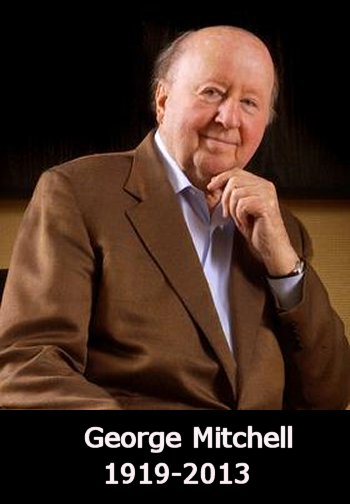
George Mitchell is a true American hero.
Considering my admiration for this man, I
regret to say that I never had the
chance to meet him. He died a year and
a half before I ran across his photo. That said, due
to my curious relationship with Mr.
Mitchell's sister Maria, from the moment I
read about him, I felt a
powerful connection.
Although Fracking is a
controversial subject, when done properly the benefits
are great. Say what you
will about Fracking, without it America would still be
under the cruel thumb of OPEC domination.
I am old enough to remember long lines of cars waiting for gas and Arab threats
to cut oil supply even further.
Thanks to George Mitchell, that problem is a thing of
the past.
Fracking, short for
'hydraulic fracturing', is a process that
uses pressurized water to crack open rock formations in
order to release oil and natural gas. No one had
succeeded until Mitchell came along. Nor did success
come quickly. Throughout his 15 years of failure,
Mitchell was forced to endure the wisdom of the crowd that
said it could not be done. Like Thomas Edison,
George Mitchell was one of those people who refused to quit till he
got it right. Thank goodness he stayed with it.
Ignoring the naysayers, George Mitchell's shale revolution freed America
from its heavy dependence on Arab oil.
George Mitchell
went on to create The Woodlands, an affluent city just
north of Houston. Mitchell had purchased a huge tract
of land in the midst of a thick Texas pine forest and he
was determined to preserve as much of the surrounding
forest as possible. Mitchell was an early
conservationist who became a persistent voice for environmentally-responsible economic growth. Mitchell wished to demonstrate how civilization and nature could be
intertwined harmoniously if humans were willing to use sufficient imagination. With these ideas in
mind, he created
The Woodlands by building homes and commercial areas
within the beautiful pine forest to
exist in harmony. Mitchell's master
plan called for preserving trees, protecting the environment,
minimizing flooding and creating ways to blend homes and forest
together.
The Woodlands won a Special Award for Excellence in
1994 from the Urban Land Institute. One can only wonder what
Mitchell's many critics had to say now. Indeed, Mitchell's understanding
of how to integrate modern technology with environmental responsibility
was light years ahead of its time. People have
called The Woodlands the
'City
of the Future'.
|
 |
George Mitchell dreamed
of becoming an astronomer back in high school. He built his own telescope
to help satisfy his curiosity. Mitchell loved to dream about
outer space. Assuming he would study astronomy in college,
throughout high school he concentrated on math,
physics and chemistry.
However, one summer his
older brother Johnny arranged a job in the oil patch. At this
point Mitchell became enthralled with the hunt for petroleum.
Realizing the search for oil would be a more profitable profession
that looking for life on other planets, Mitchell redirected
his college goal to petroleum engineering.
One of George Mitchell's
greatest traits was his loyalty. He understood the education
he received at Texas A&M was what enabled him to become a success in
his chosen field. Consequently George Mitchell came to love
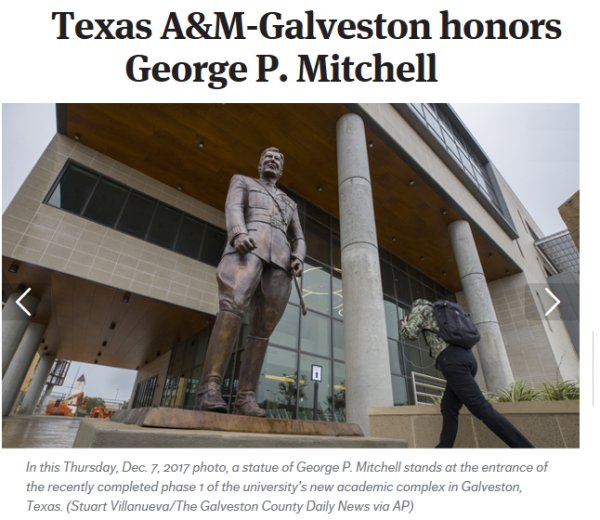
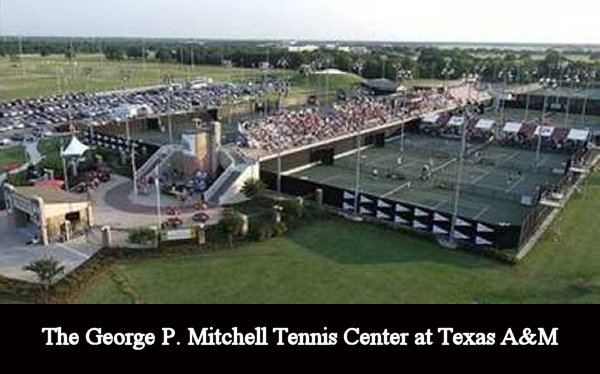
Texas A&M with a passion. Over the course of his life, Mitchell donated $100 million dollars to the school. In so
doing, Mitchell became the greatest benefactor in the history of
Texas A&M. George Mitchell is a legend at his alma mater and
deservedly so.
When Mitchell
pledged millions to jump-start an astronomy facility on the campus,
he had a secret agenda. He still wanted to explore the
mysteries of the Universe. Mitchell talked about it so often his
friends teased him about his love of outer space. His friends
referred to
Mitchell as
'The Star-struck Billionaire'.
George Mitchell did not
have many letdowns in his life, but there were a few.
Mr. Mitchell's passion for
astronomy set him up for his greatest disappointment, the failure of the Super Collider Particle
Accelerator.
A particle accelerator is a device that uses electromagnetic fields
to propel charged particles to high speeds and contains them in
well-defined beams. The idea is to unlock the secrets of
the atom. When completed, this ambitious project would have formed a giant
circular tunnel around Waxahachie, a city south of Dallas.
Mitchell was
instrumental in getting the Superconducting Super Collider project
approved by President Ronald Reagan in the 1980s. Sadly, it
was killed off in the 1990s due to budget cuts. The project
was left half finished. Had the Supercollider been completed, it would have boosted energy 20
times larger than any accelerator ever constructed. No doubt
the Supercollider would have allowed the U.S. to retain dominance in
high-energy physics. Mitchell was devastated at his loss.
This project had been his baby. It took him a long time to get over
this setback.
As a visionary, one can assume that Mitchell understood the
practical long-term benefits of this
project far better than the average man. But there was nothing
he could do about it other than accept defeat, something he
wasn't used to.
Picking up the pieces as
best he could, Mitchell quietly saved the
Alpha Magnetic Spectrometer at Texas A&M University. Then
he funded
research to create stronger magnets to help in cancer research.
The list of his good deeds goes on and on.
Watching Mitchell mope
around, one day a friend said, "If you love astronomy so much, why
not build something at A&M?"
What a great idea!
Since Mitchell was dying to renew his love of all things
interstellar, why not build an Astrophysics center indeed!
Boys and their toys, right? First Mitchell
funded the Giant Magellan Telescope high in the Andes Mountains of
Chile.
For good measure, Mitchell
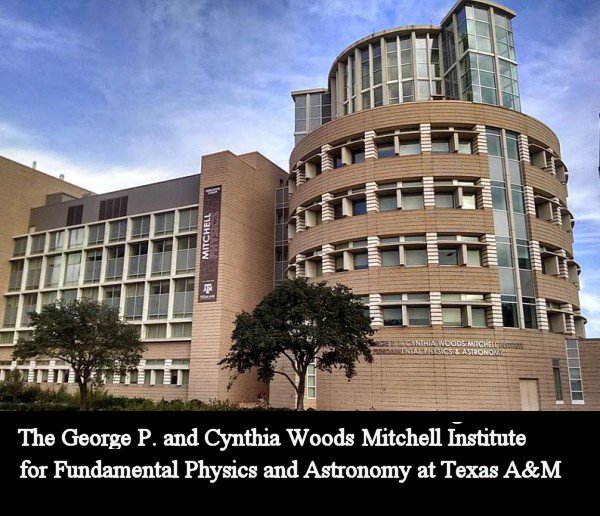
endowed the Mitchell Institute for Fundamental Physics and Astronomy,
an astrophysics lab designed to research complex issues
of the universe. Mitchell needed
a celebrity to get his Physics institute off to a rousing start. Mitchell
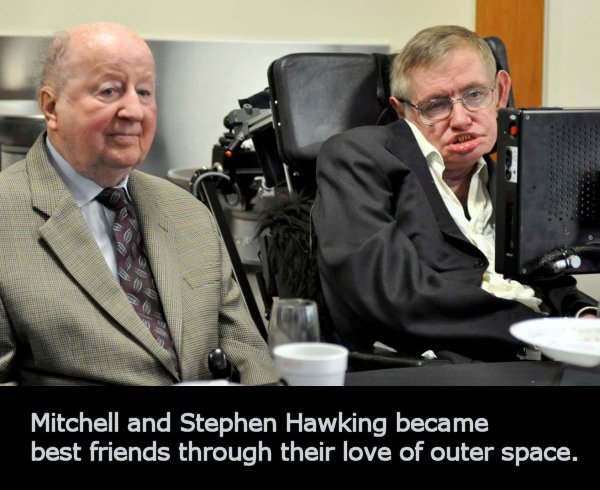
knew just the guy, Stephen Hawking, the world’s most famous
scientist since Albert Einstein. Mitchell
had met Hawking during his work on the Supercollider
project. Hawking was impressed at the depth of Mitchell's
interest while
Mitchell was equally impressed with the professor's profound insight
into the mysteries of life. The two men formed a deep
friendship.
Mitchell brought Hawking
to lecture at A&M on four different occasions. During
Hawking's stay, the world-renowned physicist would delight in
traveling across campus in his wheelchair. He loved
to interact with astonished students who liked to greet him with a
Texas-sized "Howdy, how ya doin', Dr. Hawking!"
George Mitchell had to
grin. Nothing like a warm Aggie welcome for the world's most
famous scientist! In Mitchell's words:
"Stephen loved to cross campus in his motorized wheelchair
and surprise people.
He would scoot
from the Student Center across to the Physics building. Many
an Aggie stopped in their tracks upon seeing Stephen Hawking
roll across campus with a big smile on his face. 'Is that
really
who I think it is??'
Stephen enjoyed
their enthusiasm and liked having them stop to say hello to him.
This chance to connect with the school's hero-worshipping students was very
special for him."
In addition to their
intellectual brilliance, both men shared a sense of humor. Late in
his life, George Mitchell was no longer able to walk.
Now Mitchell, like Hawking, was confined to a wheel chair. Did
Mitchell, once a swift tennis player, dwell on his problem? No, of course not.
Competitive as always, Mitchell challenged Hawking to a wheelchair
race. Next thing you know, the two friends were racing each
other down the long corridors.
Wouldn't you love to see
a video of that??
|
|
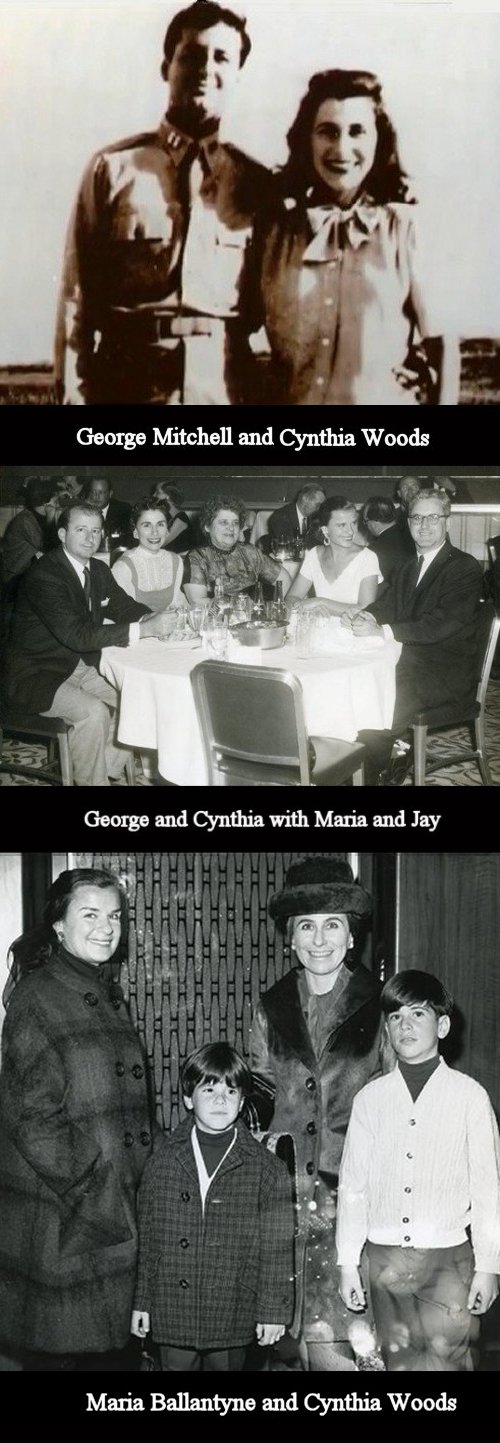 |
George Mitchell
named The Woodlands after his wife
Cynthia Woods (Wood-Lands, get it?) Then he named the
nearby Cynthia Woods Pavilion
after his wife as well. Cynthia had an interesting sense of
humor. Cynthia laughed at
how her husband's curious naming-quirk had given her pop culture status.
She
loved to tease him about it.
"Gosh, George, let's call your next city 'The Cynthia'.
Or you could rename your annual Mardi Gras party 'The Woodspecker Ball'.
Instead of 'Dickens on the Strand', we could have
'The Parade of Cynthia Wooden Soldiers'!"
Cynthia Woods
did much more than help her husband George find names to
honor
her with. In addition to serving as inspiration to
Mitchell throughout their time together, Ms. Woods
raised 10 exceptional children. That was quite an
accomplishment.
Cynthia
was born in 1922 in New York City. She and her
identical twin Pamela moved to southern Illinois at the age
of eight. The young Miss Woods was an excellent student. At the age of
twelve, she won the county
spelling bee. Cynthia's family fell upon hard times during the Great Depression. In search of work, the twins and their mother moved to
Houston in 1938. Both girls supported their mother as
teenagers by working day jobs while attending night school at the
University of Houston.
The story of how
George and Cynthia met is sweet. Oddly enough,
however, they
each told a much different
version of the encounter. I like George's version better, but
let's hear
what Cynthia had to say first.
Following the
1941 Thanksgiving football game between the University of
Texas and Texas A&M, Cynthia was introduced to a young A&M
graduate named George during their train ride back to Houston.
George was a buddy of sister Pamela's
current boyfriend. Cynthia was accompanied by a
blind date. She was not happy because the man had
been drinking heavily. In addition, Cynthia sensed something special
about this guy she had just met. He seemed
very smart, something she found attractive.
How could she ditch her
drunken date in order to check out this interesting young
man? Cynthia
persuaded Pamela's boyfriend to lure her inebriated date elsewhere on
the train for a while. Sitting close by in another
seat, George had been watching. Seeing the
opening, George wasted no time occupying the vacant seat
next to Cynthia. Moving fast, George got Cynthia's phone
number before her inebriated date could reappear.
Okay, let's hear
George tell the story. His version
of the event
is much better. In fact, his humorous retelling
reminds me of an old joke.
Q: What is the fastest way to get the attention of a pretty girl?
A: Hang a fake Congressional Medal of Honor around your neck.
While serving in
the U.S. Army Corps of Engineers during World War II, Mitchell
met his future wife during the Thanksgiving
train ride, 1941. George was returning to Houston from the
big
football game. Everyone was in a bad
mood. Texas A&M had been undefeated until the Texas
Longhorns came to
College Station and beat the Aggies 23-0.
"So
here I am on the train. There are these two attractive
girls, twin sisters, identical, both beautiful, very smart.
The one I liked the best had a blind date with an A&M
senior. He wasn't paying any attention to her because
he was still upset over the football game and had gotten
drunk to dull his misery.
Me? I had forgotten about the game. I was more worried
how I was going to get this girl's phone number with
this guy in my way.
Cynthia must have sensed my interest because she tried
to
persuade her date to
go to the back of the car to take care of something.
However, to my consternation, this guy wouldn't leave.
Maybe he was smarter than I gave him credit for. I
guess my interest in Cynthia was written all over my
face because the guy stared darts at me. Just then this
guy
noticed my open bag
and saw something shiny. It was my tennis medal.
I had once
been captain of the A&M tennis
team and they had honored me with this medal. He recognized the A&M
insignia, so without asking he grabbed my medal and pulled it out
for a better look.
The tennis medal was loosely
attached to a gold watch. When the watch fell on the floor,
Cynthia noticed it and asked the
significance. Handing it to her for inspection, I explained I had won the watch as the top
engineering student of A&M.
When Cynthia looked at the inscription, her expression
changed instantly. I will never forget her smile.
She found a way to send the guy to fetch her a drink, I got
her number and we started dating. We were married a
year later on Halloween. Cynthia was a wonderful wife
and a wonderful mother. We had 10 children. I
loved her so much. Everything I did, we did
together... family, philanthropy, rebuilding Galveston.
Cynthia was the love of my life."
|
THE
MAN WHO
saved
Galveston
|
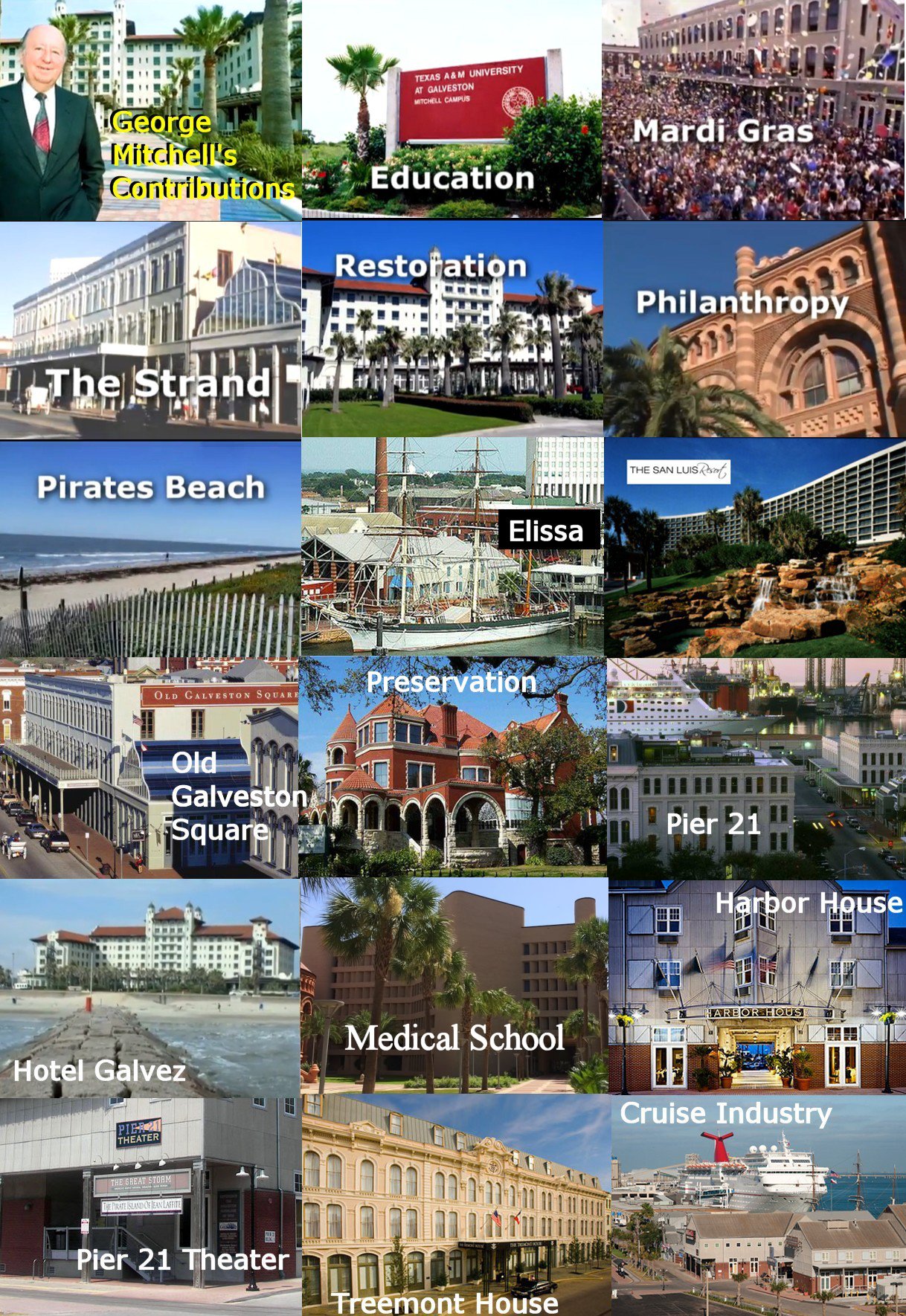
In the 1970s,
Galveston's Seawall Boulevard and the
important
downtown Strand area showed serious signs of
neglect. The beautiful ancient
Victorian homes were crumbling. Now that the city
had fallen upon hard economic times,
Mitchell's hometown was no longer the
tourist destination it had once been.
George Mitchell often brought his family to
the Island. He took special delight in
teaching his sons and daughters how to fish.
He would tell them stories about how he grew up
here and fished to earn spending money.
George and Cynthia loved Galveston
so much they made it their getaway home from
Houston.
However, it was getting impossible to overlook
the decline. Every time they visited, they would notice
that
another old home or old building had
fallen prey to the wrecking ball.
One day as they drove down the main
boulevard, Cynthia remarked, “Someone really
should do something to preserve those
beautiful old homes. It would be a
shame to see them torn down. So much
imagination!”
Mitchell nodded. He agreed with his wife. Galveston
possessed the finest Victorian architecture
in the Southwest. It was sad to see
these stunning homes destroyed. They
deserved to be protected.
Mitchell talked it over with
Cynthia in earnest. They agreed
the citizens who lived in
Galveston lacked resources. No one had
the money to finance the much-needed
restorations on their own. Nor was
there a city leader strong enough to mobilize
a community rescue effort.
Mitchell felt terrible. He could not take it any more.
Someone had to do something about the decline.
With a deep sigh, Mitchell realized he
was the only man with the conviction and resources to
do something about it. This was a very
important moment for him. If Galveston
could be saved, it was up to
him.
By chance, on a 1972 visit to Savannah,
Georgia, George Mitchell learned about an innovative
preservation program which included a revolving fund
for buying and reselling endangered
properties.
Seeing the merits of this program,
Galveston's native son put the
restoration project
on his back. He dispatched six
members of the Galveston Historical
Foundation to study Savannah’s achievements,
then find ways to adapt them to his home town.
Contributions from local foundations helped
establish a revolving fund for Galveston
that initially saved over 30 buildings.
The main contributors were
George and Cynthia Mitchell.
Mitchell took immense pleasure in lavishing
his personal fortune on the
island where he was born. He
cheerfully provided the money necessary
to restore the city's historic downtown
Strand District. However, the restoration did not take place
overnight.
Over a period of 40
years, the Mitchells invested $175
million in rehabilitating historic
properties in The Strand National Historic
Landmark District.
Today
Mitchell Historic Properties oversees
Galveston properties owned by the family of George
Mitchell. These include hotels such as Tremont,
Galvez, and Harbor House plus
several buildings in the historic
Strand District and Pier 21 along the
harbor.
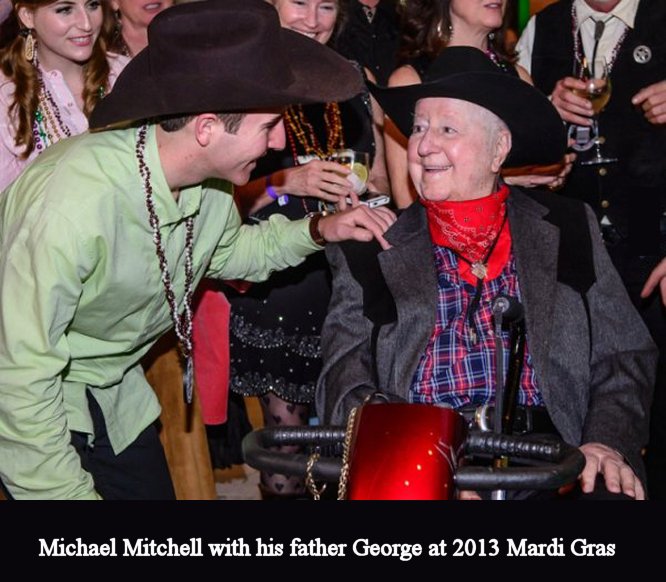
Of all the projects Mitchell was involved in, the one that
really caught his fancy was reintroducing Mardi Gras
to Galveston. This popular festival
had disappeared during World War II. George Mitchell had long
dreamed of restoring the Island's splendid tradition.
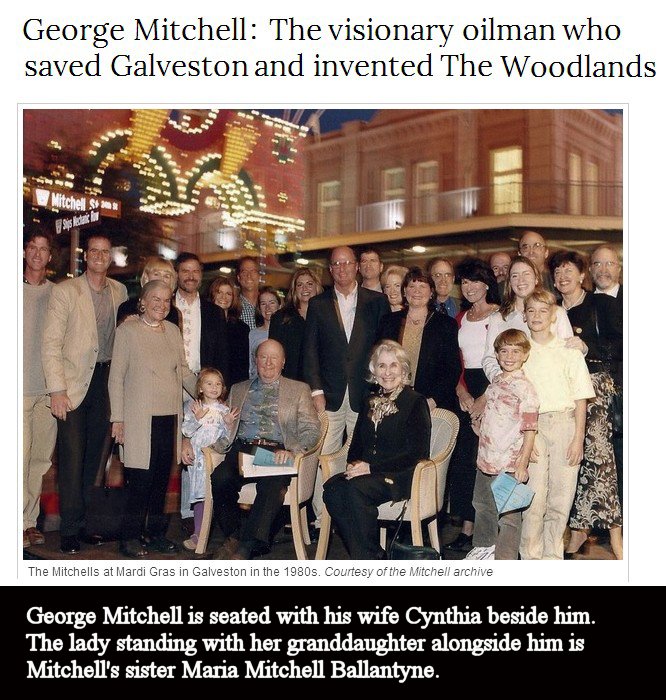
In 1985, George and
Cynthia
were in the process of remodeling
the elegant Tremont House Hotel in the historic Galveston Strand District.
This, of course, was the hotel the ghosts
had once haunted after drowning in the flood
of 1900. Figuring the ghosts
might return for a good Mardi Gras
party, George and
Cynthia scheduled the revival of the Mardi Gras celebration to coincide with
the Grand Opening of the Tremont House Hotel.
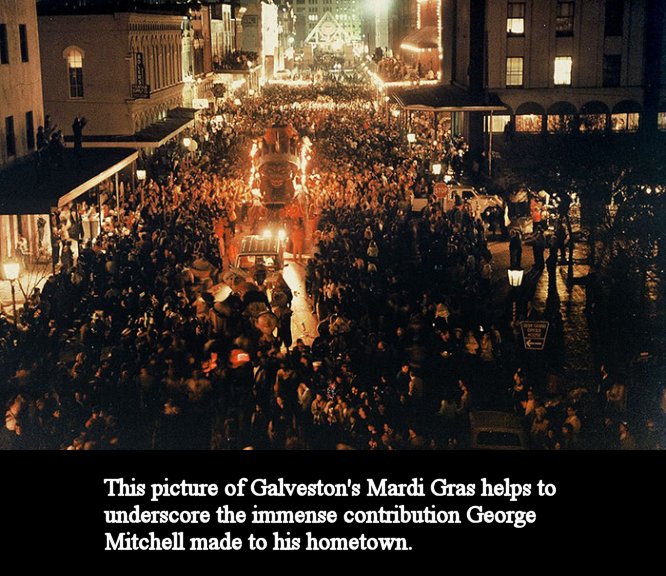
The 1985 revival
was
spectacular. The dedication featured a mile-long parade saluting
"The Age of Mythology."
The
streets were jam-packed as a crowd of many thousands came
out to celebrate. This had
been a great idea.
Galveston's Mardi Gras was back to stay.
George Mitchell was a human dynamo. He
used
his immense willpower to personally restore
Galveston to economic
prosperity. No one asked him to do it, he
just took it upon himself. His
contribution is one of the most noble efforts
I have ever come across.
Mitchell
cared so much about his home town that he
dedicated himself to resurrecting the economy of an
entire city and restore its traditions. This was an amazing
accomplishment.
George Mitchell is a legend today in
Galveston. As well he should be!
The number of projects he was involved in
is absolutely incredible. However, of
all the things he did, 'Mitchell's Master Stroke' put
Galveston back on the world map. That
is the subject of our next chapter.
Can you guess what George Mitchell did? Let's find
out.
|
 |
|
|
|