|
The
Louvre Museum VI
Rick Archer,
May 2007
|
|
A FAVORITE PLACE FOR
THE ARTISTS TO VISIT
If you visit the Louvre you will often
come across artists copying paintings. This is more
commonly seen on the second floor, as there are fewer
visitors. These artists or students have been given special
permission to copy paintings, and the only stipulation that
the Louvre make is that the copy should be a different size
to the original.
As you will note, some of these visiting
artists do an amazing job of reproducing the originals.
|
|
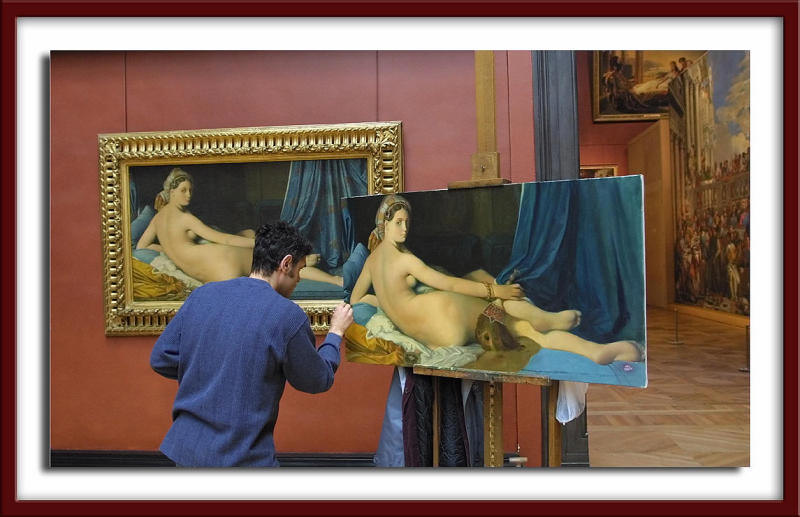 |
038.
Une Odalisque (1814)
Jean-Auguste-Dominique Ingres
(Title contributed
by Rebecca) Title confirmed on
Louvre Museum web site
|
|
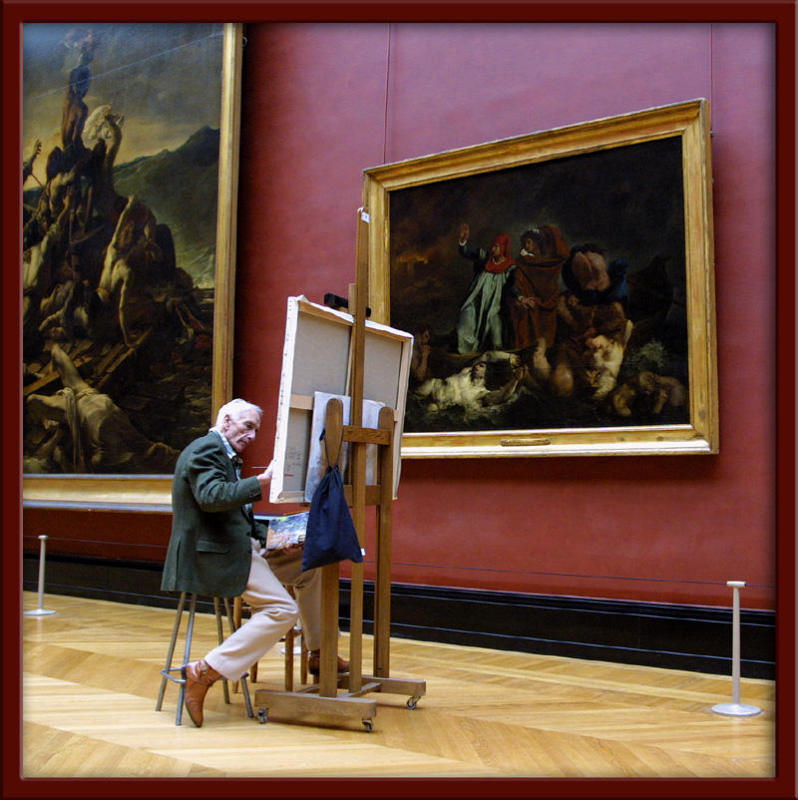 |
039.
The Barque of Dante,
sometimes known as Dante and Virgil in Hell,
is the first major painting by the French artist Eugène
Delacroix. It is one of the works signaling a shift in
the character of narrative painting from Neo-Classicism
towards the Romantic movement. It was completed in time for
the opening of the Salon of 1822 and currently hangs in the
Musée du Louvre, Paris.
On the left of the photo is The Raft of the Medusa
by Théodore Géricault.
Both Titles
contributed by Meghan Martinez, April 2011
|
|
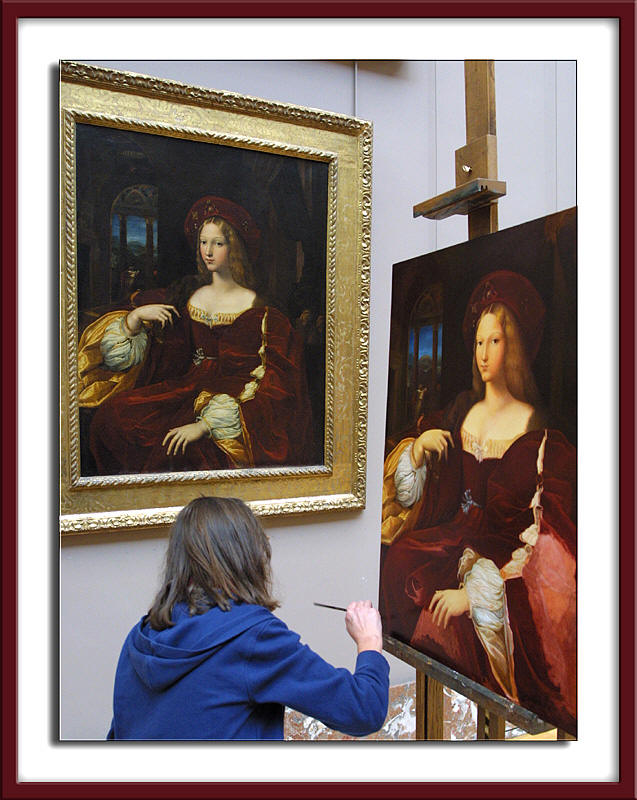 |
040. Portrait of Jeanne d'Aragon,
1518, Rafael (title contributed by Olga Milner)
|
|
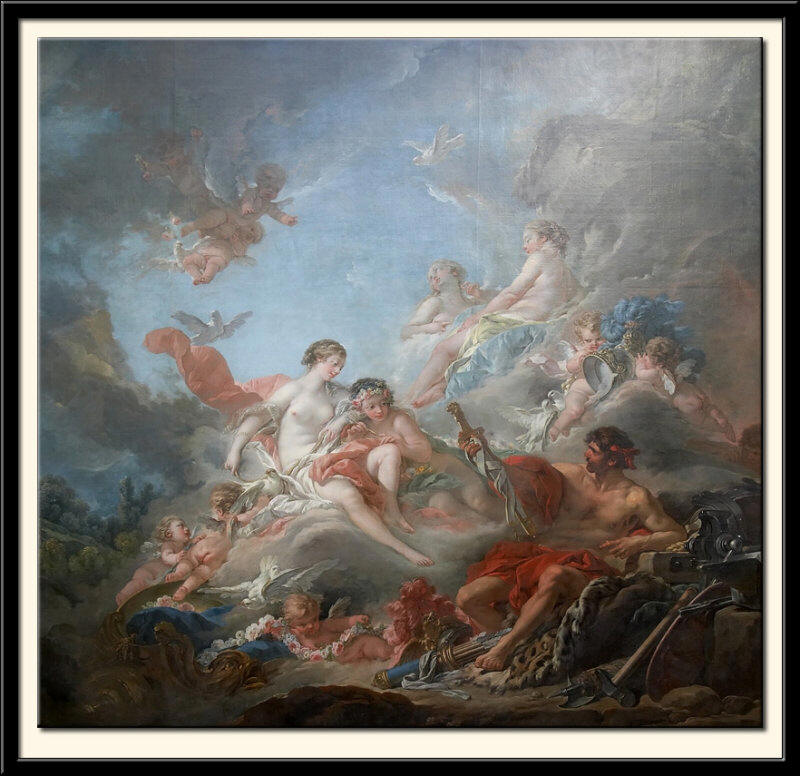 |
041.
Vulcan Presenting Venus with Arms for Aeneas
François Boucher, 1757
Painting 041
is by Boucher and I believe it is a portrayal of Venus
meeting her husband Vulcan to collect some weapons for
her son Aeneas -
see the following link
Also there is a similar painting in the Wallace
Collection in London -
link
Hope this helps,
Trevor Robinson
December 2010
|
|
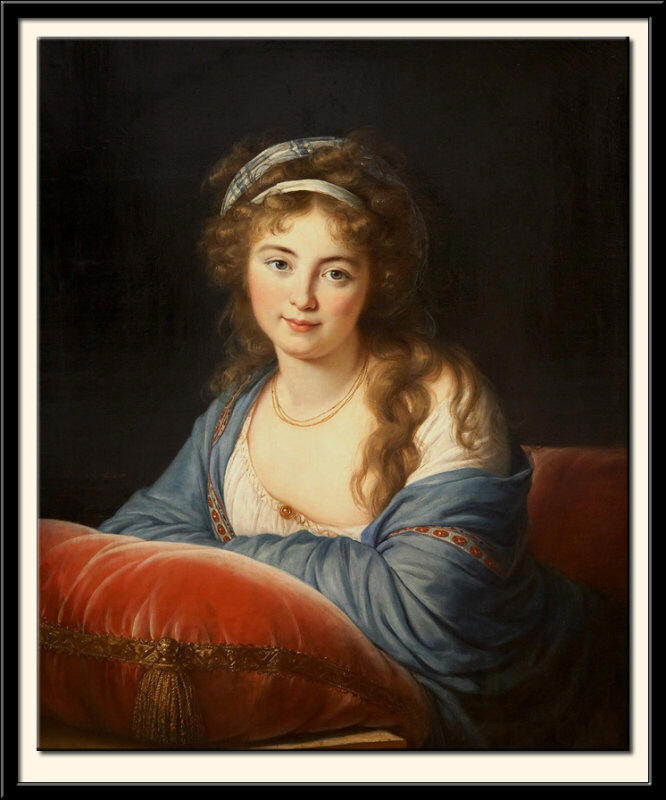 |
042.
Countess
Skavronskaia by
Elisabeth Louise Vigee-LeBrun, 1789
Madame
Vigee-LeBrun was famous for her portrait of Marie Antoinette
shortly before the start of the French Revolution.
This title was
contributed by Anna Anderson, July 2010.
Here is what Ms.
Anderson had to say about Vigee-LeBrun:
"A friend and I
were in France in September-October 2009 on an 'art and
history' tour of our own devising. The Louvre figured
largely in our plans, of course, and I photographed some
of the same works you did.
I have been studying fine art and history on my own
since leaving the work force, and have many pieces
stored in my computer for my reference. I recognized the
work of Vigee-LeBrun at once. She was Marie-Antoinette's
court painter, and was affected by the Revolution along
with so many others. At least she kept her head! Poor
Marie-Antoinette did not. How that woman must have
suffered - her husband, her friends, and her children.
Vigee-LeBrun also painted Russian royalty/ aristocracy,
along with a zillion self-portraits of herself and her
daughter."
|
|
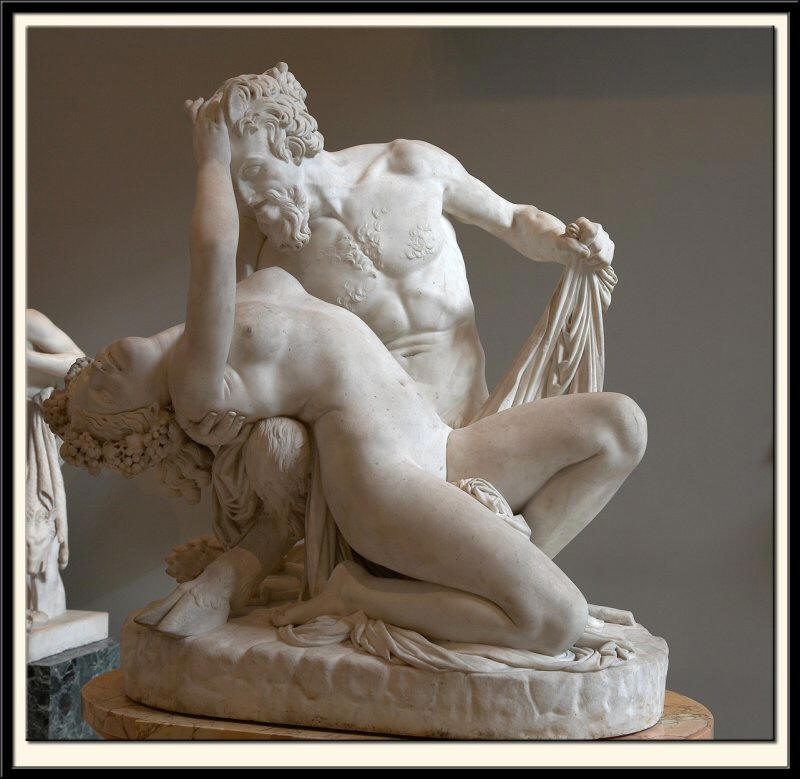 |
043.
Satyr and Nymph
|
|
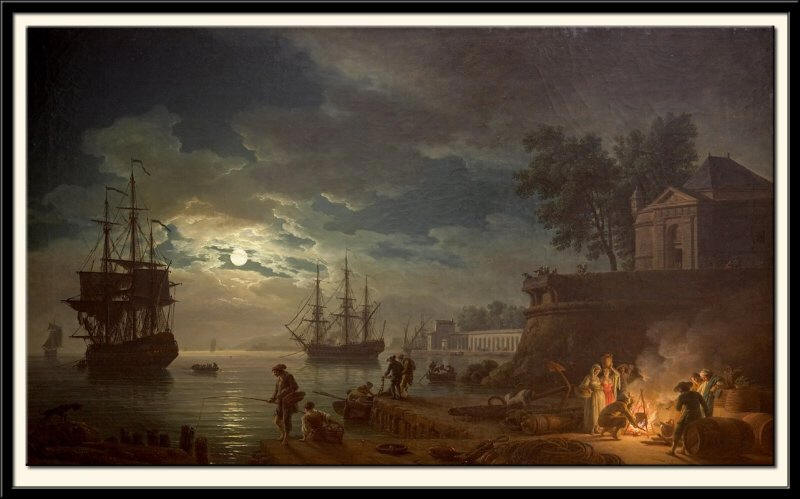 |
044. Does anyone
know the name of the painting above?
|
|
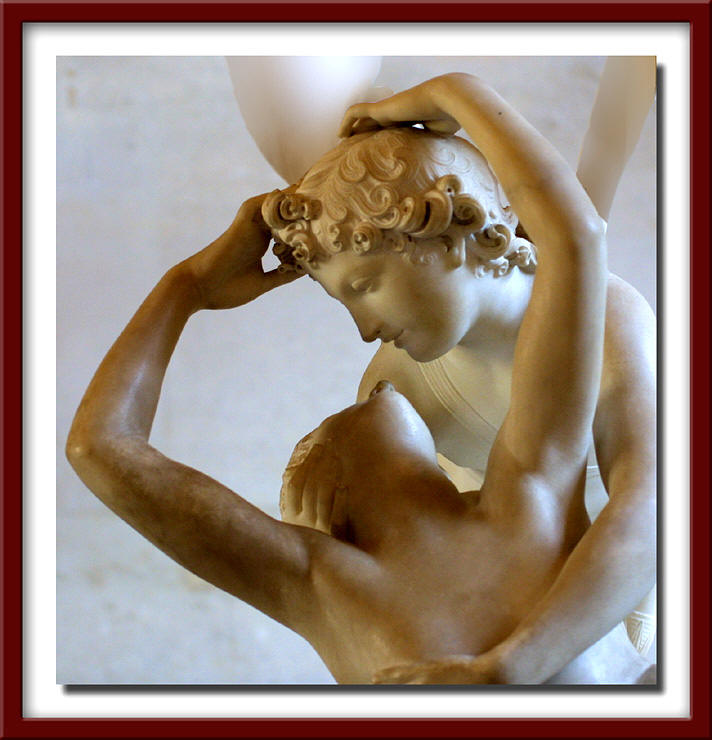 |
045. Cupid and Psyche, by
Canova 1796
|
|
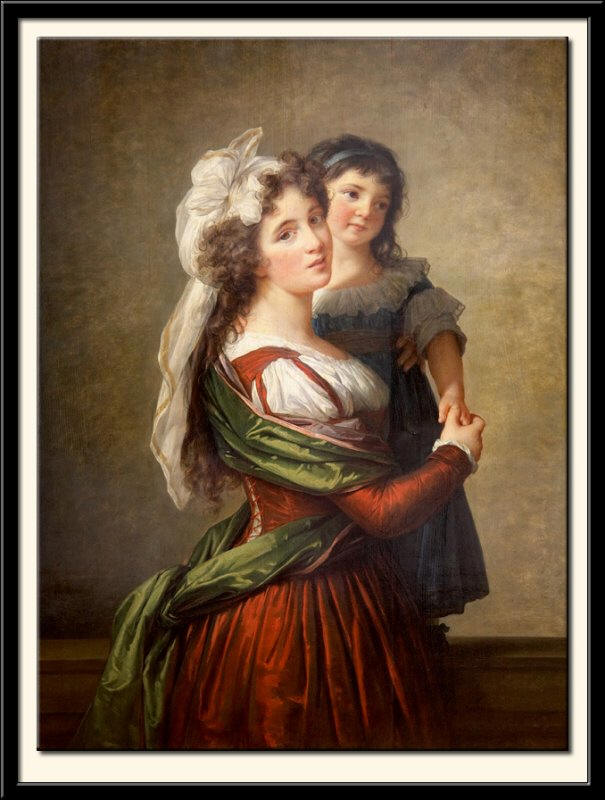 |
046.
Madame
Rousseau & her Daughter
by Elisabeth Louise Vigee-LeBrun,
1789
This painting by Elisabeth-Louise Vigee-Le Brun from 1789
depicts Madame Rousseau and her daughter. She was the wife
of renowned French architect Pierre Rousseau
This Title was
contributed by Anna Anderson in July, 2010
|
|
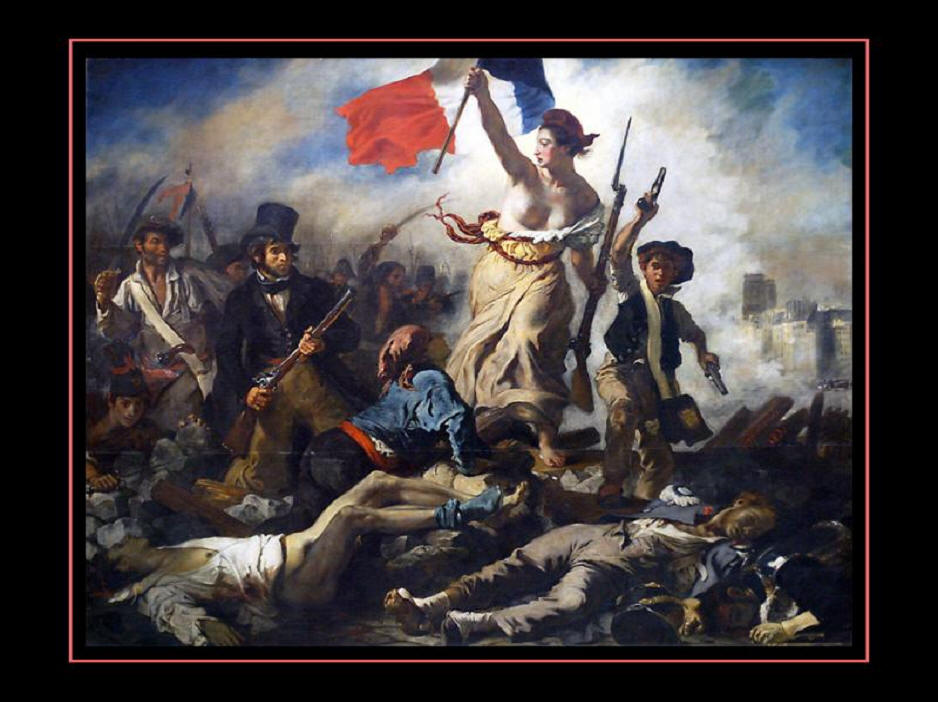 |
047.
Liberty Leading the
People (La
Liberté guidant le peuple) by
Eugene Delacroix
Delacroix's most influential work came in 1830 with
the painting Liberty Leading the
People.
Delacroix's painting is an unforgettable
image of Parisians, having taken up arms, marching forward
under the banner of the tricolour representing liberty and
freedom; Delacroix was inspired by contemporary events to
invoke the romantic image of the spirit of liberty. The
soldiers lying dead in the foreground offer poignant
counterpoint to the symbolic female figure, who is
illuminated triumphantly, as if in a spotlight.
It was painted to commemorate the
July Revolution that had just brought Louis-Philippe to the
French throne.
This painting, which is a sort of political poster, is meant
to celebrate the day of 28 July 1830, when the people rose
and dethroned the Bourbon king. Alexandre Dumas tells us
that Delacroix's participation in the rebellious movements
of July was mainly of a sentimental nature. Despite this,
the painter, who had been a member of the National Guard,
took pleasure in portraying himself in the figure on the
left wearing the top-hat. Although the painting is filled
with rhetoric, Delacroix's spirit is fully involved in its
execution: in the outstretched figure of Liberty, in the
bold attitudes of the people following herm contrasted with
the lifeless figures of the dead heaped up in the
foreground, in the heroic poses of the people fighting for
liberty, there is without a doubt a sense of full
participation on the part of the artist, which led Argan to
define this canvas as the first political work of modern
painting.
Liberty Leading the People caused a disturbance. It shows
the allegorical figure of Liberty as a half-draped woman
wearing the traditional Phrygian cap of liberty and holding
a gun in one hand and the tricolor in the other. It is
strikingly realistic; Delacroix, the young man in the
painting wearing the opera hat, was present on the
barricades in July 1830. Allegory helps achieve universality
in the painting: Liberty is not a woman; she is an abstract
force.
The French government bought the painting but officials
deemed its glorification of liberty too inflammatory and
removed it from public view. Nonetheless, Delacroix still
received many government commissions for murals and ceiling
paintings. He seems to have been trying to represent the
spirit and the character of the people, rather than glorify
the actual event, a revolution against King Charles X which
did little other than bringing a different king,
Louis-Philippe, to power.
Following the Revolution of 1848 that saw the end of the
reign of King Louis Philippe, Delacroix' painting, Liberty
Leading the People, was finally put on display by the newly
elected President, Napoleon III. Today, it is visible in the
Louvre museum.
The bare-breasted woman in the picture is
known in France as "Marianne". The boy holding
a gun up on the right is sometimes thought to be an
inspiration of the Gavroche character in Victor Hugo's 1862
novel, Les Misérables.
|
This is the end
of our Exhibit. Hope you enjoyed the visit! Rick
Archer, dance@ssqq.com
|
|